Megawatts, delivered.
You need power on a date, not equipment in a yard. PowerHubX handles the interconnection, delivers solid-state transformer (SST) power hubs with HubOS compute–power coordination built in, and commits to when you go live.*
*Power-on timelines depend on site readiness and utility approval. Commitments are defined in each customer agreement.
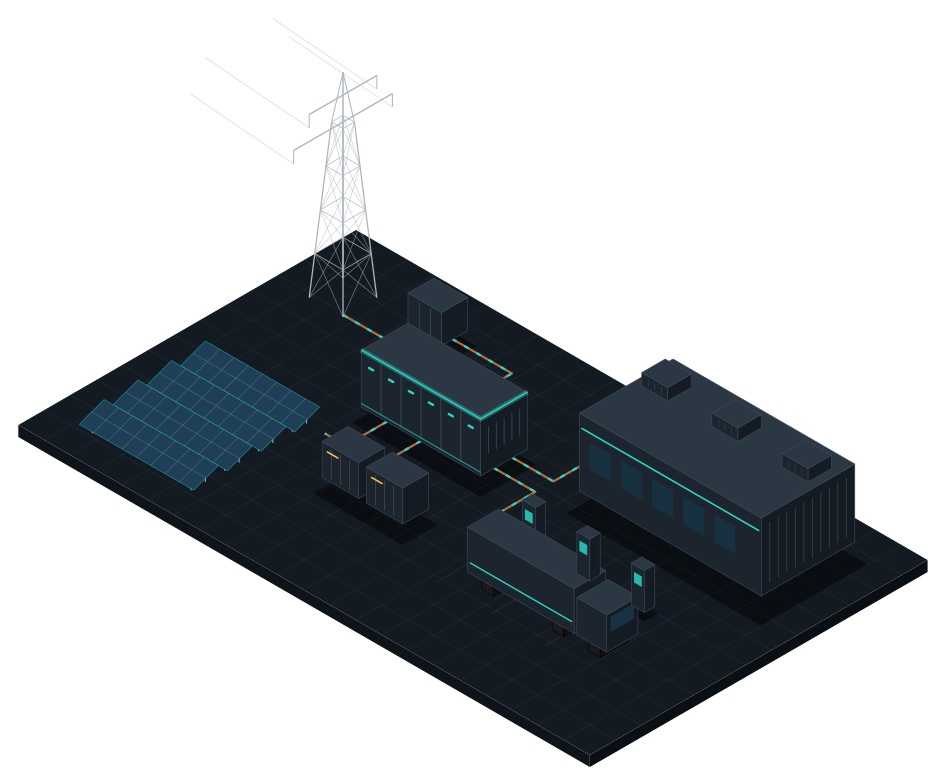
Hardware is no longer the bottleneck. Solid-state transformers are arriving from manufacturers around the world. What’s missing is someone who gets them connected, energized and running.
PowerHubX takes responsibility from site assessment to power-on: interconnection, qualified hardware, control, commissioning and financing — one partner, one commitment.
Every hub runs HubOS, compute–power coordination built on the SST. One model plans the site, runs it and keeps improving it — so utilities can say yes sooner.
Fewer conversions. Full control.
A solid-state transformer replaces the conventional chain of line-frequency transformer, switchgear and rectifier with a single power-electronic hub. That changes what a site can be.
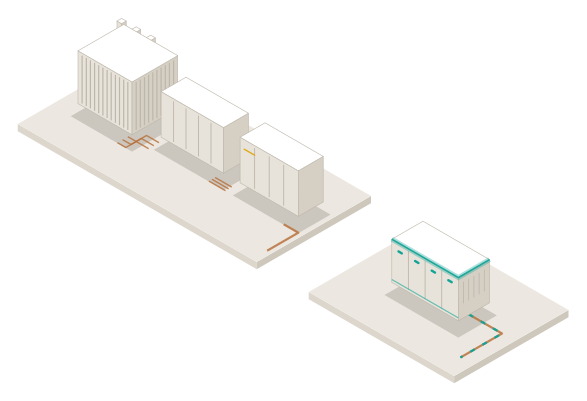
Medium voltage to DC, in one hub
Fewer conversion stages between the utility and your load, and less equipment to site, wire and maintain.
Native 800 VDC
Built for next-generation AI racks. Storage, solar and megawatt chargers couple onto the same DC bus.
Controlled in software
Power flow, voltage support and fault response are set by fast power electronics, not fixed in copper and iron. That is what makes coordination possible.
Compact and prefabricated
Factory-built modules ship ready to set and scale in parallel, without waiting on long-lead conventional transformers.
Performance varies by hardware platform and site design.
The hardware is qualified. The intelligence is ours.
Every hub is built on qualified SST hardware from leading manufacturers. What PowerHubX builds is HubOS: compute–power coordination layered on the SST, scheduling compute, charging and storage together with the power electronics, inside the limits the grid sets.
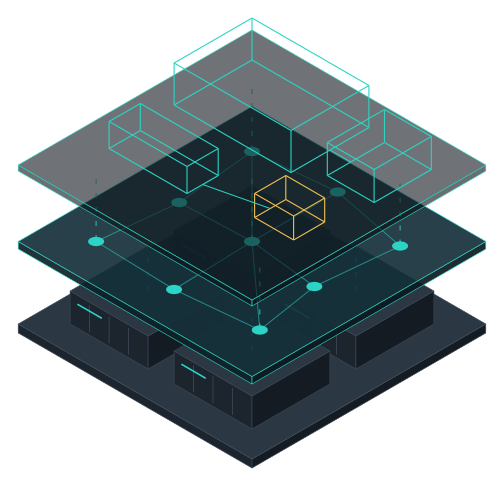
- Layer 3
Site model
A live model of your site, its loads and its grid connection. The same model is used to plan and to operate.
- Layer 2
Compute–power coordination
Schedules AI workloads, charging sessions and storage against grid signals and available SST capacity — in seconds, within service limits.
- Layer 1
SST power layer
Qualified hardware from multiple manufacturers, integrated to PowerHubX specification, with millisecond control of power flow.
One model, from plan to operation.
Most sites are planned in one tool and run in another, and the gap between them is where capacity gets lost. HubOS uses a single site model for the life of the site.
Plan
The model sizes your hub, shapes the interconnection request and shows the utility exactly how the site will behave.
Operate
The same model runs the site, dispatching compute, charging and storage within the limits the utility approved.
Improve
Every hour of operating data recalibrates the model, so the site can serve more load on the same connection over time — and your next site is planned on better data.
What the utility approved is what runs. Every response is on the record.
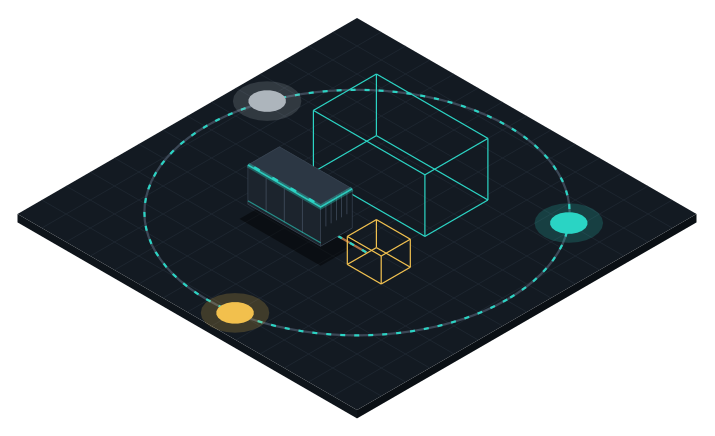
What if your power-on date came with a commitment?
Equipment vendors ship boxes. Software vendors ship dashboards. PowerHubX delivers the outcome — energized megawatts — and stands behind it.
Interconnection, handled
We find the capacity, file the requests, work the utility studies and negotiate controllable-load terms that move your site up the line. You don’t need an interconnection team. You have ours.
Explore interconnection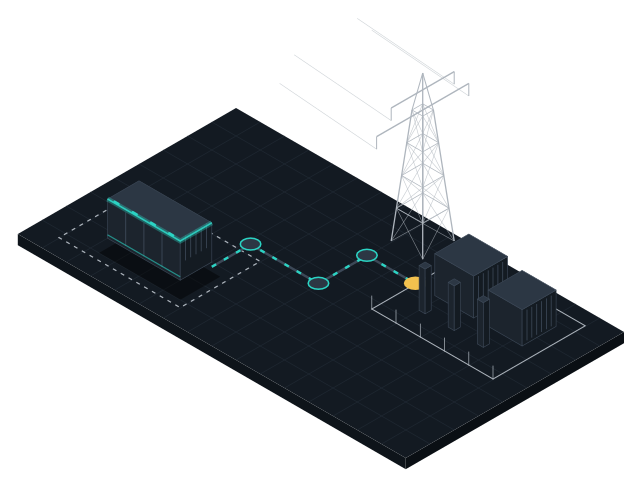
Power-on, committed
Once your site is ready, we commit to a power-on date — backed by our contract, our warranty and our insurers. One accountable U.S. partner for the whole system, from the medium-voltage connection to your DC bus.
*Power-on timelines depend on site readiness and utility approval. Commitments are defined in each customer agreement.
Explore our commitmentAny qualified hardware, one control layer
HubOS works across qualified SST hardware from multiple manufacturers, so your site is never locked to one supplier. It keeps an auditable record of every response and is hosted, operated and controlled in the United States.
Explore the technologyFinancing & power-on as a service
Buy it, finance it, or lease it. Our power-on-as-a-service fleet bridges the gap while permanent capacity is built — then moves to your next site.
Explore financing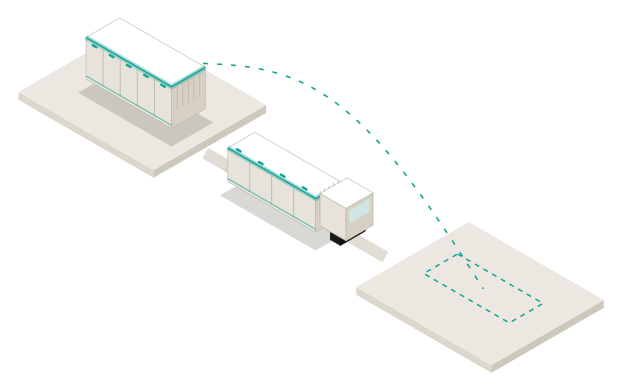
From site to power-on
- 1
Assess & model
We evaluate your site and build its model: loads, available capacity and the fastest interconnection path.
- 2
Connect
We prepare and file interconnection requests and negotiate controllable-load terms with your utility.
- 3
Commit
Once the site is ready, you get a power-on date in your contract.
- 4
Deliver
Qualified hardware, integrated to our specification and tested as a system, ships ready to set.
- 5
Energize
We commission the hub, bring HubOS online on the same model used to plan it, and hand over a live site.
- 6
Operate & improve
Monitoring, service and grid-response reporting, with a model that keeps improving the site for its whole life.
One partner. Three ways to power what’s next.
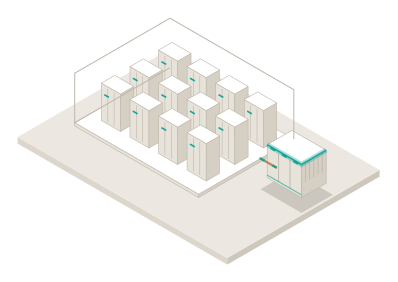
Inference where your users are.
Parallel power hubs deliver 800 VDC to your racks, HubOS keeps you in step with the grid, and our interconnection team works the new large-load rules for you.
Request a power-on assessment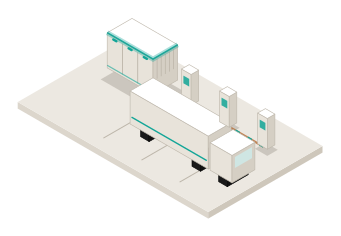
Charge the fleet you already bought.
Megawatt charging needs medium voltage and a dedicated transformer. We deliver both in one hub, handle the utility, and stretch every kilowatt of your connection across more trucks. For logistics depots, ports and mine sites.
Talk to our fleet team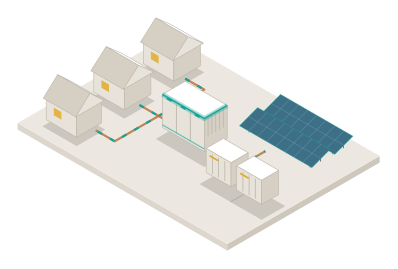
Make the microgrid a power plant.
One hub becomes the DC backbone for solar, storage, chargers and local loads — and a single dispatchable node your utility can count on.
Join the pilot programBuilt on qualified hardware
We qualify solid-state power hardware from leading manufacturers, test it independently, and integrate it to PowerHubX specification. You choose the configuration. HubOS runs on every one, and we stand behind the system.
| Configuration | Power | Best for |
|---|---|---|
| Cabinet | 250 kW – 1 MW | Charging depots, edge inference, microgrid backbone |
| Container | 2–4 MW each, parallel to 30 MW | AI inference sites, charging hubs, power-on as a service |
| Store | Sized to site | Battery storage, DC-coupled |
Specifications are manufacturer specifications or design targets and vary by hardware platform.
See configurationsGet a date, not an estimate.
One partner for interconnection, hardware, control and commissioning — with a power-on commitment.
Electrify on your schedule.
Megawatt charging on the connection you have, with the utility work handled.
Connect new load with confidence.
Every PowerHubX site is dispatchable, visible and verifiable, and it runs the way it was modeled.
Bankable power infrastructure.
Qualified hardware, a U.S. warranty counterparty, performance guarantees and auditable operating data.
Your site, powered on.
Tell us about your site. We’ll tell you when it can be live.
*Power-on timelines depend on site readiness and utility approval. Commitments are defined in each customer agreement.